A centenary, championship or stadium move approaches
Before a public commitment or expensive output, establish the decision owner, source material, privacy boundaries and whose interests the work will affect.
WHO WE SERVE · SPORTS & FANDOM
A club, team, league or federation holds history, identity and fan trust that are not yet governed as connected assets.
Relevant when history, reputation, continuity, rights or future enterprise can no longer be treated as separate projects.
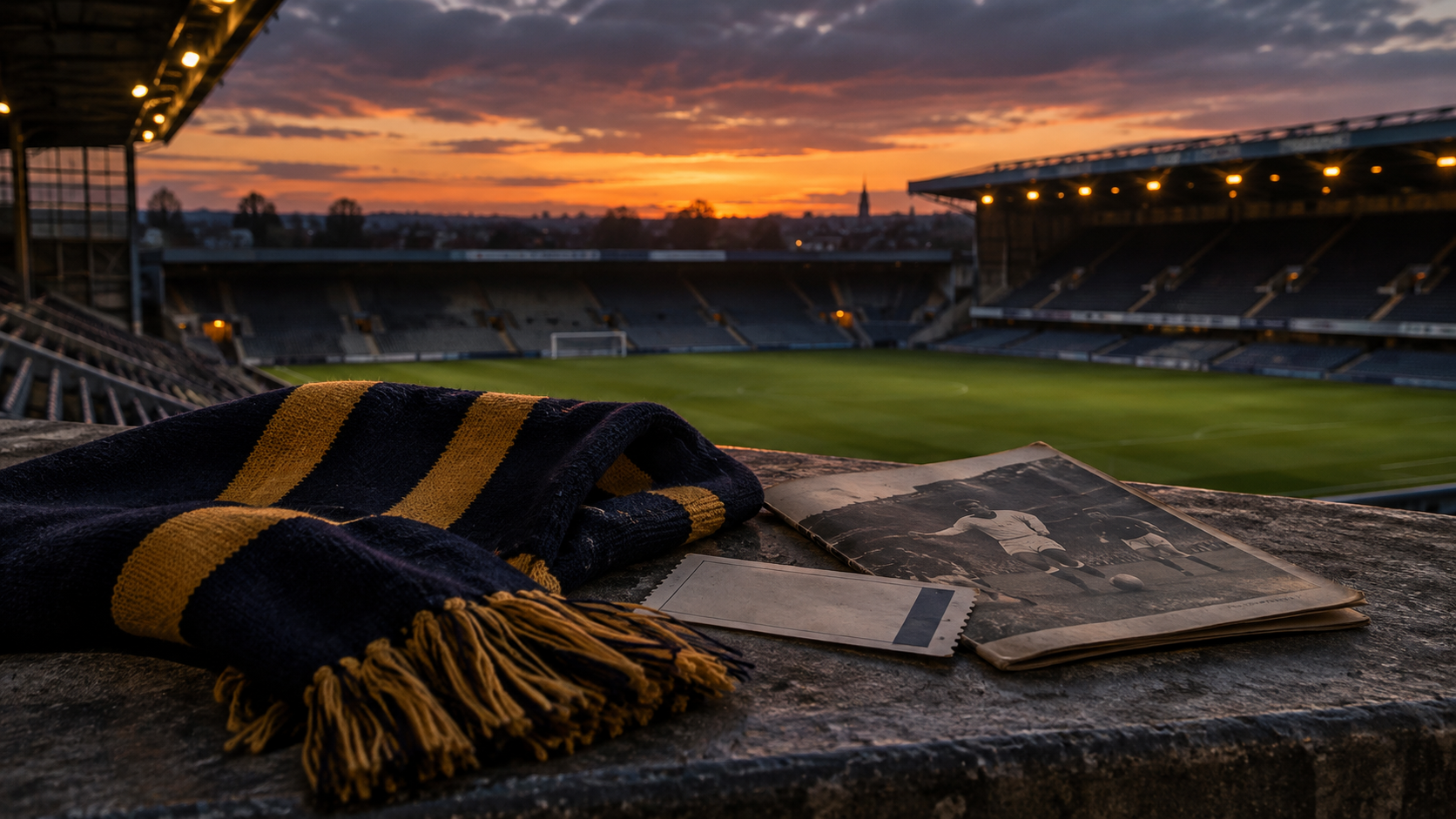
THE MOMENT BEHIND THE REQUEST
A stadium move or centenary brings a fixed date, inherited symbols, old footage, supporters and sponsors into one decision. Heritage can connect generations of fans; rushed licensing or generic merchandise can squander that meaning.
A club, team, league or federation holds history, identity and fan trust that are not yet governed as connected assets. This is why a book, an archive, a reputation issue or a commercial offer should be understood in the context of the person who will own the consequences.
A private first review asks what changed, who has authority, which evidence exists and where trusted advisers already have a role. It can recommend a narrowly defined project or a longer relationship if the questions remain connected.
WHO THIS INCLUDES
The scope follows the actual decision and its consequence. A job title, public profile or wealth threshold is not by itself the criterion.
WHEN THE NEED BECOMES CLEAR
Before a public commitment or expensive output, establish the decision owner, source material, privacy boundaries and whose interests the work will affect.
Before a public commitment or expensive output, establish the decision owner, source material, privacy boundaries and whose interests the work will affect.
Before a public commitment or expensive output, establish the decision owner, source material, privacy boundaries and whose interests the work will affect.
Before a public commitment or expensive output, establish the decision owner, source material, privacy boundaries and whose interests the work will affect.
Before a public commitment or expensive output, establish the decision owner, source material, privacy boundaries and whose interests the work will affect.
WHAT MAY BECOME RELEVANT
Club history and archive programmes
Heritage, museum and stadium experiences
Fan intelligence and owned community
Content, collectibles and licensing
Sponsorship and cultural partnerships
Private Office and specialist coordination
WHERE WE MAY HELP
A founder or elder holds memories, motives and relationships that documents alone cannot reconstruct—and time is becoming a factor.
Preserve first-person memory, verified history and the context that gives a life, family or institution its meaning.
See the work ↗A club, athlete, artist, creator or public figure has reach, but the relationship depends on platforms, campaigns and intermediaries.
Turn trusted attention into owned participation, insight and durable value without reducing people to traffic.
See the work ↗A licensing, sponsorship, media, naming or acquisition approach arrives before ownership, approval authority and exclusions are fully understood.
Clarify control and commercial logic before a name, story, archive, catalogue or cultural asset is used by others.
See the work ↗A family, principal, place or institution wants cultural work that carries a specific history rather than generic decoration or status signalling.
Express identity and history through art, collections, publications and spaces with real provenance and meaning.
See the work ↗HOW TO BEGIN
Begin with what happened, what you are trying to protect or make possible, who has authority and what you are concerned could go wrong. The first review determines whether Legacy Private Office is relevant and what should happen next.
For a family, this might mean protecting an elder's account before beginning a film or planning a retreat; for an owner, understanding the rights behind a proposed venture; for an institution, reconciling the archive with a new public programme. Each begins with different evidence and a different decision owner.
QUESTIONS BEFORE CONTACT
A centenary, championship or stadium move approaches, Club archives and fan memory are fragmented, Commercial activity is detached from heritage, Fan data and owned access are limited, Leadership or ownership changes. A first conversation separates the time-sensitive decision from work that can wait.
Clubs and teams, Leagues and federations, Owners and presidents, Sports venues, Athlete foundations can each have a legitimate role, but their authority and information rights should not be assumed to be identical.
Club history and archive programmes, Heritage, museum and stadium experiences, Fan intelligence and owned community, Content, collectibles and licensing, Sponsorship and cultural partnerships, Private Office and specialist coordination. The scope is selected around the decision and intended outcome rather than the client category alone.
No. A defined review or project may be sufficient. An ongoing relationship is justified only when connected decisions recur, several advisers need a stable source of context, or decision memory would otherwise be repeatedly rebuilt.
A club, team, league or federation holds history, identity and fan trust that are not yet governed as connected assets. Relevance is defined by consequence, timing and the cost of fragmented decisions—not by status or a fixed wealth threshold.
No. Begin with what changed, the decision you are facing and what you are trying to protect. A first conversation can distinguish a narrow specialist brief, a Private Review and a wider coordinated engagement.
Yes. A principal or trusted adviser can describe the fact pattern, timing and desired outcome without naming the family or sharing confidential records. Identity and documents should follow only after fit, authority, conflicts and confidentiality are clear.
Usually not. The role is to keep the wider objective, sequence and decision memory connected while legal, tax, investment, immigration, brokerage, valuation, security and other qualified specialists retain authority in their fields.
It should clarify the decision owner, relevant evidence, stakeholders, privacy boundaries, risks, specialist roles and the smallest defensible next step. It should remain useful even if the recommendation is to pause or continue with an existing adviser.
Yes. Family-only, adviser, board, restricted and public layers can be separated. A public book, film, profile, event or venture is never assumed simply because the underlying subject has public value.
A sensible first step
A first conversation can remain appropriately high-level while relevance, authority, confidentiality and the next professional step are established.
Discuss Your Situation