
Preserve
A biography is often the wrong place to start
Before the manuscript, determine what evidence exists, whose memory matters and which private boundaries the finished story must respect.
Read the briefingINSIGHTS
Briefings for founders, families, public figures, institutions and the advisers around them—written to clarify a consequential decision, not to fill a publishing calendar.
Each briefing begins with a situation, challenges an assumption and shows what should be understood before time, publicity or commercial momentum narrows the options.
LATEST BRIEFINGS
Before the manuscript, determine what evidence exists, whose memory matters and which private boundaries the finished story must respect.
Read the briefing
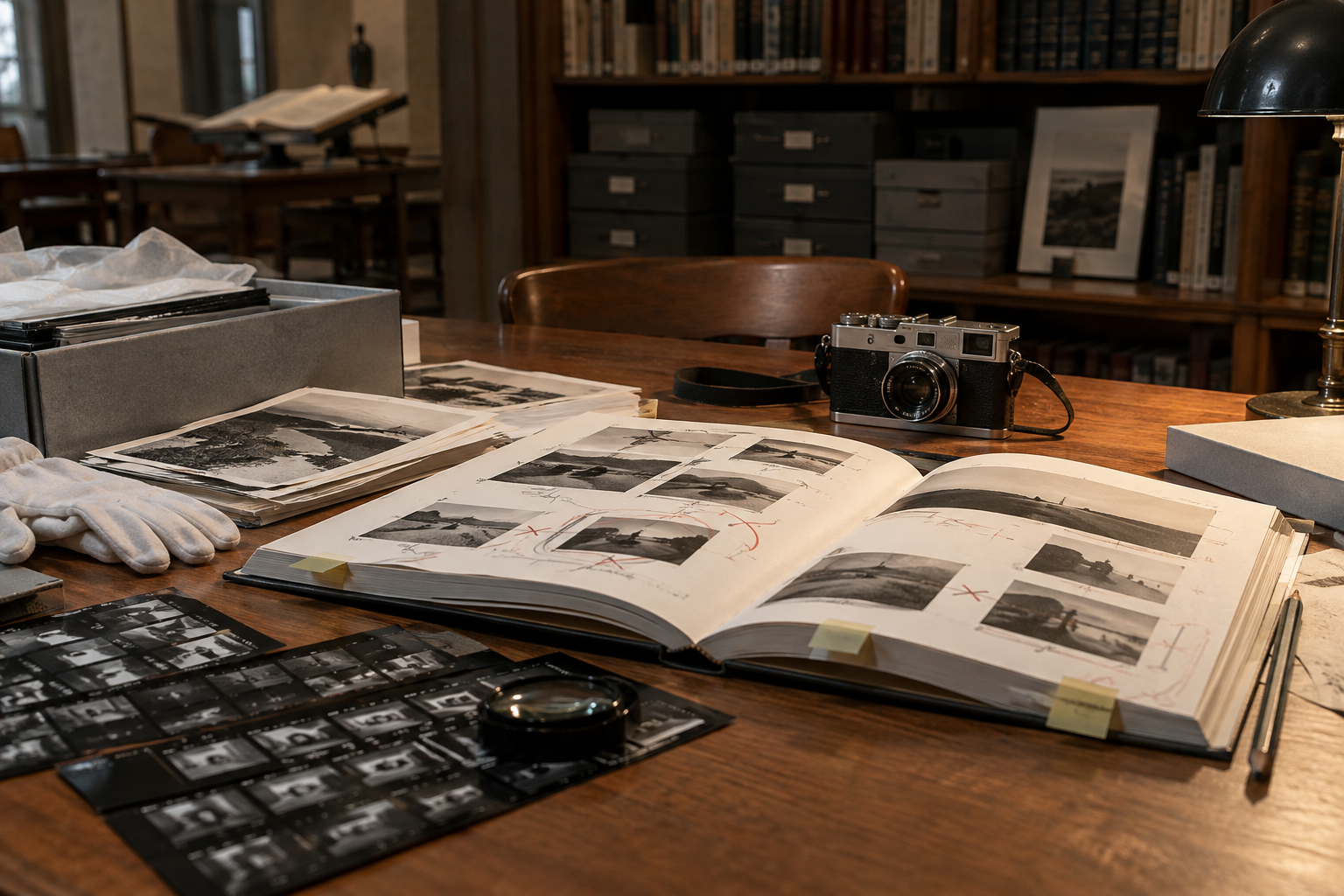
Scans without provenance, metadata, rights and access rules can make a private archive larger but less useful.
Read the briefing
Succession changes more than authority. It changes who can explain why the enterprise became what it is.
Read the briefing
After succession, exit or retirement, the most credible future role begins by separating unfinished obligations from genuinely meaningful new commitments.
Read the briefingAbstract values rarely guide the next generation until they are connected to real choices, sacrifices and consequences.
Read the briefing
Visibility can make a principal known without making the market understand what they uniquely see or stand for.
Read the briefingA weak official record allows partial accounts, outdated profiles and repeated inaccuracies to become the default source.
Read the briefing
The most expensive object can still feel generic when maker selection begins before the history, setting and stewardship are clear.
Read the briefing
A retreat, reunion or milestone becomes part of family continuity when the purpose, participation, ritual and record are designed to be remembered and repeated.
Read the briefing
Reach becomes durable only when there is permission, direct access, trust, repeat demand and a reason to participate beyond the platform.
Read the briefingA licensing conversation should begin with ownership, approvals, exclusions and evidence—not the headline fee.
Read the briefing
Reputation and capital create access, but they do not replace demand, operator skill, governance or a defensible right to win.
Read the briefingA successful move can still fragment records, advisers, identity, cultural assets and family decision memory.
Read the briefing
Complexity increases when every specialist is competent but no one is responsible for the memory and sequence of the whole question.
Read the briefingEDITORIAL AREAS
QUESTIONS BEFORE CONTACT
No. Illustrative situations are used to make a decision pattern concrete; they are not claims about identifiable clients or confidential results.
Use it to test an assumption, identify a missing decision owner or frame a non-identifying first conversation. It should support professional judgment, not replace advice specific to the client's facts.
Because momentum often gathers around a book, film, event, licence, move or venture before the evidence, authority and consequences behind it are clear. The challenge is designed to improve the brief, not to dismiss the output.
Yes, when the same question is already active and delay or premature action has consequences. The first discussion can remain high-level while fit, authority and confidentiality are established.
A briefing is useful when it helps you identify a decision, assumption or risk before a visible project gathers momentum. Relevance is defined by consequence, timing and the cost of fragmented decisions—not by status or a fixed wealth threshold.
No. Begin with what changed, the decision you are facing and what you are trying to protect. A first conversation can distinguish a narrow specialist brief, a Private Review and a wider coordinated engagement.
Yes. A principal or trusted adviser can describe the fact pattern, timing and desired outcome without naming the family or sharing confidential records. Identity and documents should follow only after fit, authority, conflicts and confidentiality are clear.
Usually not. The role is to keep the wider objective, sequence and decision memory connected while legal, tax, investment, immigration, brokerage, valuation, security and other qualified specialists retain authority in their fields.
It should clarify the decision owner, relevant evidence, stakeholders, privacy boundaries, risks, specialist roles and the smallest defensible next step. It should remain useful even if the recommendation is to pause or continue with an existing adviser.
Yes. Family-only, adviser, board, restricted and public layers can be separated. A public book, film, profile, event or venture is never assumed simply because the underlying subject has public value.
A sensible first step
A private first conversation can establish whether the issue is timely, who should be involved and what information should remain undisclosed.
Discuss a Relevant Question