SHAPE · AREA OF WORK
Art, Culture & Cultural Assets
A family, principal, place or institution wants cultural work that carries a specific history rather than generic decoration or status signalling.
When this is relevant
Express identity and history through art, collections, publications and spaces with real provenance and meaning.
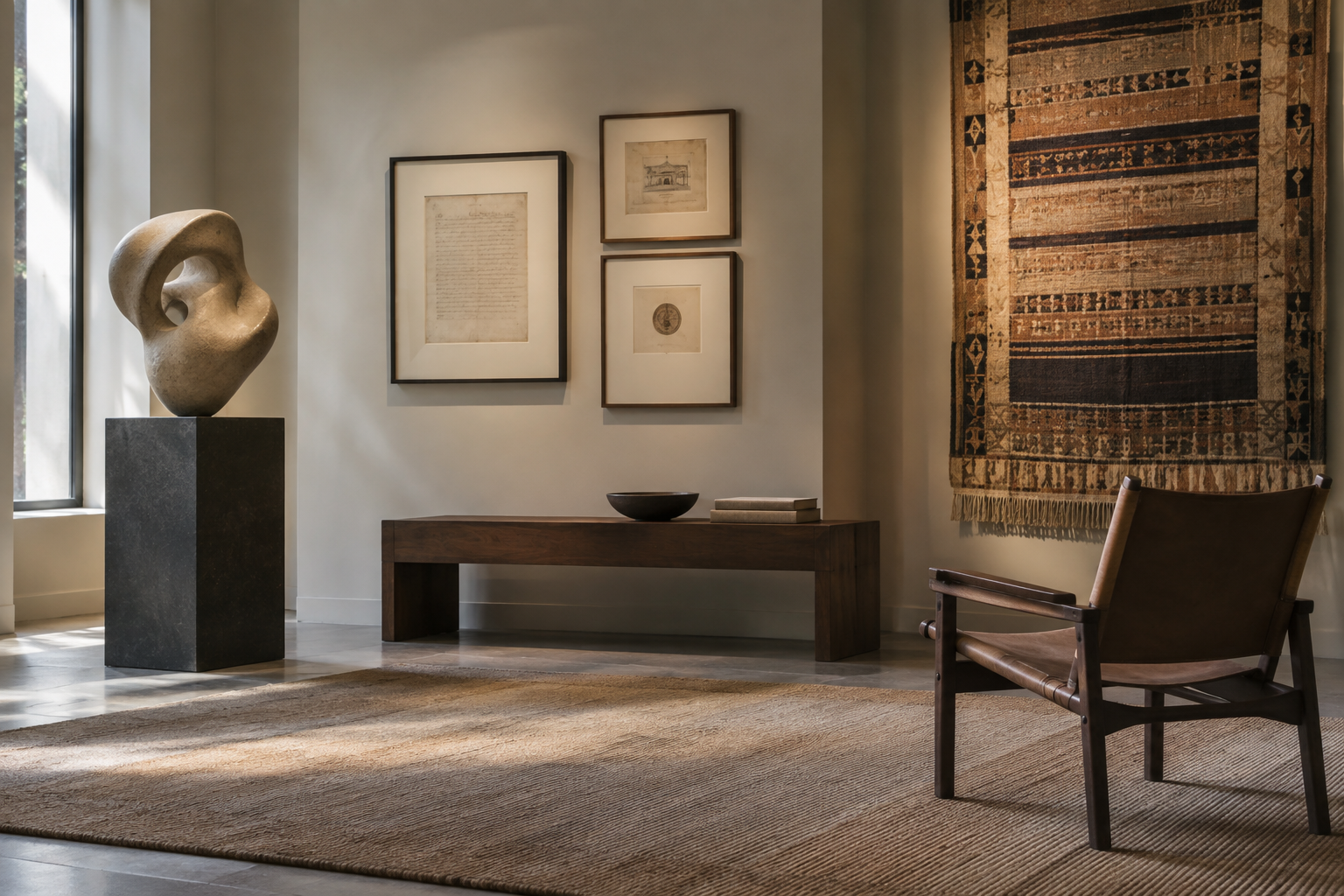
A SITUATION YOU MAY RECOGNISE
The request on the surface is rarely the whole decision.
A family is planning a private cultural room in a new residence. A designer can specify beautiful objects immediately, but no one has yet decided whose history the room should carry, which works have reliable provenance or whether a future generation will understand why they are there.
A family, principal, place or institution wants cultural work that carries a specific history rather than generic decoration or status signalling.
These are illustrative circumstances, not a claim about a past client. The useful first question is which decision you need to make and what evidence would make it safe to proceed.
WHAT CAN GO WRONG
The artist or object should not be chosen before the meaning, setting, audience, approval process and future stewardship are clear.
An expensive cultural project can become anonymous decoration. Collections can be displayed without consent, care plans or documentation; hospitality or institutional projects can borrow heritage motifs without a defensible connection to their source.
Getting the sequence right protects your ability to change course. Approval rights, provenance and the distinction between a private record and a public statement should be resolved before an irreversible release, transaction or produced output.
THE WORKING APPROACH
From evidence to a useful decision.
We define the meaning and setting first, then develop a curatorial and cultural brief. Artist selection, collection research, cataloguing, object narratives, permissions, design, interpretation and ongoing stewardship follow. Specialists remain responsible for conservation, valuation, acquisition and installation within their expertise.
A portrait, sculpture, textile, room, exhibition or publication can become an identifiable expression of this family or institution, with a record of who made it, what it means and how it should be cared for.
WHAT THE WORK MAY INCLUDE
Relevant services and specialist contributions.
The work below can be scoped individually or combined when decisions overlap. Each component should have an owner, an approval point and a reason to be included.
Private art and cultural advisory
Portraits, sculpture, textiles, craft and bespoke objects
Artist and specialist selection
Collection narrative, cataloguing and provenance
Private museums, founder rooms and legacy spaces
Exhibitions, cultural programmes and publications
Private cultural encounters and collector salons
Patronage and collector legacy
Provenance documentation and making films
Heritage design codes and cultural IP
WHO MAY FIND THIS RELEVANT
Several people may be affected by the same decision.
An adviser may introduce the situation without naming the principal until authority, conflicts and confidentiality have been considered.
QUESTIONS TO RESOLVE
The questions that determine the scope.
Which medium, maker and setting are credible?
Who approves and who will steward the work?
How will provenance and future use be documented?
A FIRST USEFUL OUTPUT
Begin with a brief that remains useful even if the work stops there.
The initial brief names the history to express, the intended audience, the setting, approval rights, provenance questions and the specialists the work requires.
That brief can identify the relevant evidence, decision owner, professional boundaries, near-term risks and a realistic next step. It lets you compare proposals on the actual issue rather than on the appearance of a deliverable.
QUESTIONS BEFORE CONTACT
Questions about Art, Culture & Cultural Assets
The initial scope should resolve these questions: What history or idea should become tangible? Which medium, maker and setting are credible? Who approves and who will steward the work? How will provenance and future use be documented? They determine whether the work should remain narrow or connect to a wider continuity, reputation, rights or family decision.
Depending on the evidence and intended outcome, the work may include Private art and cultural advisory, Portraits, sculpture, textiles, craft and bespoke objects, Artist and specialist selection, Collection narrative, cataloguing and provenance, Private museums, founder rooms and legacy spaces, Exhibitions, cultural programmes and publications. Each component needs a reason, an owner and an approval point; the list is not an automatic package.
Collectors and patrons, Families and principals, Hospitality and property owners, Institutions, clubs and venues, Heritage brands and cultural estates may encounter the question from different positions. The relevant client is the person or authorised institution that owns the decision and its consequences.
Express identity and history through art, collections, publications and spaces with real provenance and meaning. The artist or object should not be chosen before the meaning, setting, audience, approval process and future stewardship are clear. The result should improve a real decision or future use, not simply create a polished deliverable.
Yes. A single interview plan, evidence review, rights map, cultural brief, continuity map or opportunity assessment may be enough. The first review identifies the smallest component of art, culture & cultural assets that can resolve the immediate decision without closing off later options.
A family, principal, place or institution wants cultural work that carries a specific history rather than generic decoration or status signalling. Relevance is defined by consequence, timing and the cost of fragmented decisions—not by status or a fixed wealth threshold.
No. Begin with what changed, the decision you are facing and what you are trying to protect. A first conversation can distinguish a narrow specialist brief, a Private Review and a wider coordinated engagement.
Yes. A principal or trusted adviser can describe the fact pattern, timing and desired outcome without naming the family or sharing confidential records. Identity and documents should follow only after fit, authority, conflicts and confidentiality are clear.
Usually not. The role is to keep the wider objective, sequence and decision memory connected while legal, tax, investment, immigration, brokerage, valuation, security and other qualified specialists retain authority in their fields.
It should clarify the decision owner, relevant evidence, stakeholders, privacy boundaries, risks, specialist roles and the smallest defensible next step. It should remain useful even if the recommendation is to pause or continue with an existing adviser.
Yes. Family-only, adviser, board, restricted and public layers can be separated. A public book, film, profile, event or venture is never assumed simply because the underlying subject has public value.
A sensible first step
Begin with the decision, not the deliverable.
A private review can determine whether this area is central to your situation, one part of a wider engagement or better handled by a specialist provider.
Discuss This Situation